Blending business growth with sustainability at Scone Estates
Nestled in the heart of Perthshire, Scone Estates is a 400-year-old family-run business spanning more than 7,500 hectares of farmland, forestry, tourism and property. With a long history of balancing tradition and innovation, the estate is now focused on integrating sustainability into its operations - while continuing to support a diverse and commercially viable business.
Read time: 2 mins Added: 10/06/2026
Taking a long-term view
As expectations around climate and biodiversity evolve, estates like Scone are navigating how to invest for the future while maintaining day-to-day financial resilience. For Scone Estates, that has meant taking a long-term approach - exploring how sustainable land management can sit alongside productive farming, tourism and community engagement.
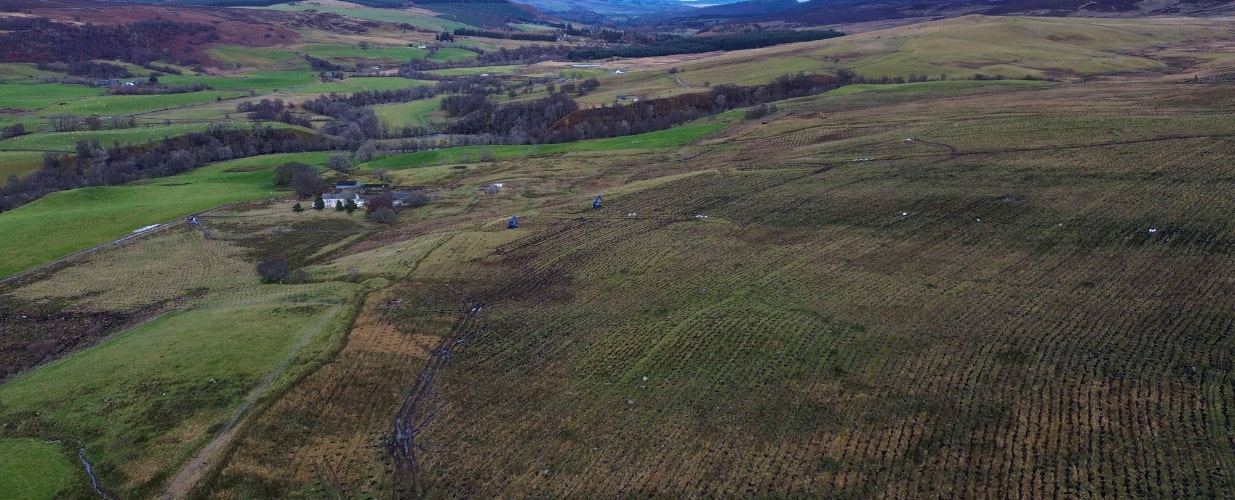
One of the estate’s most significant recent projects is a 275-hectare woodland creation scheme at North Logiealmond. The mixed-use area combines arable and pastoral land, with new planting designed to restore tree cover, support biodiversity and contribute to carbon sequestration.
“This woodland is a generational investment,” explains Brian. “The current owners won’t necessarily see the financial benefits, but the aim is to ensure the estate remains resilient for future generations.”
The estate continues to manage a broad mix of activities - from crop production and livestock grazing to forestry and tourism - while exploring how different land uses can work together.
“We want to show that you can integrate farming, biodiversity and community access,” Brian adds. “These things don’t have to operate separately.”
Unlocking investment
A key consideration for the project was how to manage the upfront costs of woodland creation.
While grant funding was available through the Scottish Forestry Grant Scheme, the timing of payments meant additional funding was needed to get the project moving.
With support from Bank of Scotland, Scone Estates secured finance through the Clean Growth Finance Initiative, helping to bridge the gap between initial investment and grant income.

By combining grant funding with finance and private investment, the estate has been able to progress the scheme while maintaining flexibility in its wider operations.
Looking beyond forestry
The woodland project is part of a broader approach to sustainability across the estate.
Plans are also in place to develop a visitor centre powered by solar, supporting the estate’s tourism offer while aligning with its environmental ambitions.
Alongside environmental benefits, the project is supporting the local economy, with contractors engaged across planting, fencing and infrastructure works.
“We’re very aware of our role in the community,” Brian adds. “It’s important that projects like this deliver wider benefits, whether that’s jobs, access to land or supporting local businesses.”
Planning for what’s next
As estates and land managers consider how best to adapt, Scone Estates is focused on staying ahead of changing expectations.
By taking a proactive approach to planning and finance, the business is building a model that supports both environmental stewardship and long-term resilience.
For Scone Estates, that means continuing to explore how sustainable land management can support the future of the business; while remaining rooted in the land it has managed for generations.
All lending is subject to status. Eligibility criteria apply.
You may also be interested in:

Finance for regenerative farming
Refinancing and new lending to support farms transitioning to regenerative practices.

Agriculture Sector hub
For more tailored guidance for the Agriculture sector, visit our specialised support hub.